Full Basement Waterproofing in Atlanta, GA
Atlanta, GA is a city of about 529,000 people that began on a ridge above the south bank of the Chattahoochee River, across the Eastern Continental Divide, so many lots slope and many older basements sit half in a hill. The short form asks one independent contractor to reach out.
Not sure if we cover your area? Check now ↓
Basement Estimate Request
Takes about 30 seconds. One local contractor gets it and contacts you.
Your details go to one independent contractor who works around Atlanta, GA, and that contractor gets in touch with you directly. See our Referral Marketing Disclosure.
Interior or Exterior Waterproofing?
Nobody can promise a basement that stays dry forever: not a contractor, not a product maker and not this site, which does no basement work. For homes in Atlanta, GA, the real choice is between two routes: catch the water inside, or keep it off the wall from outside.
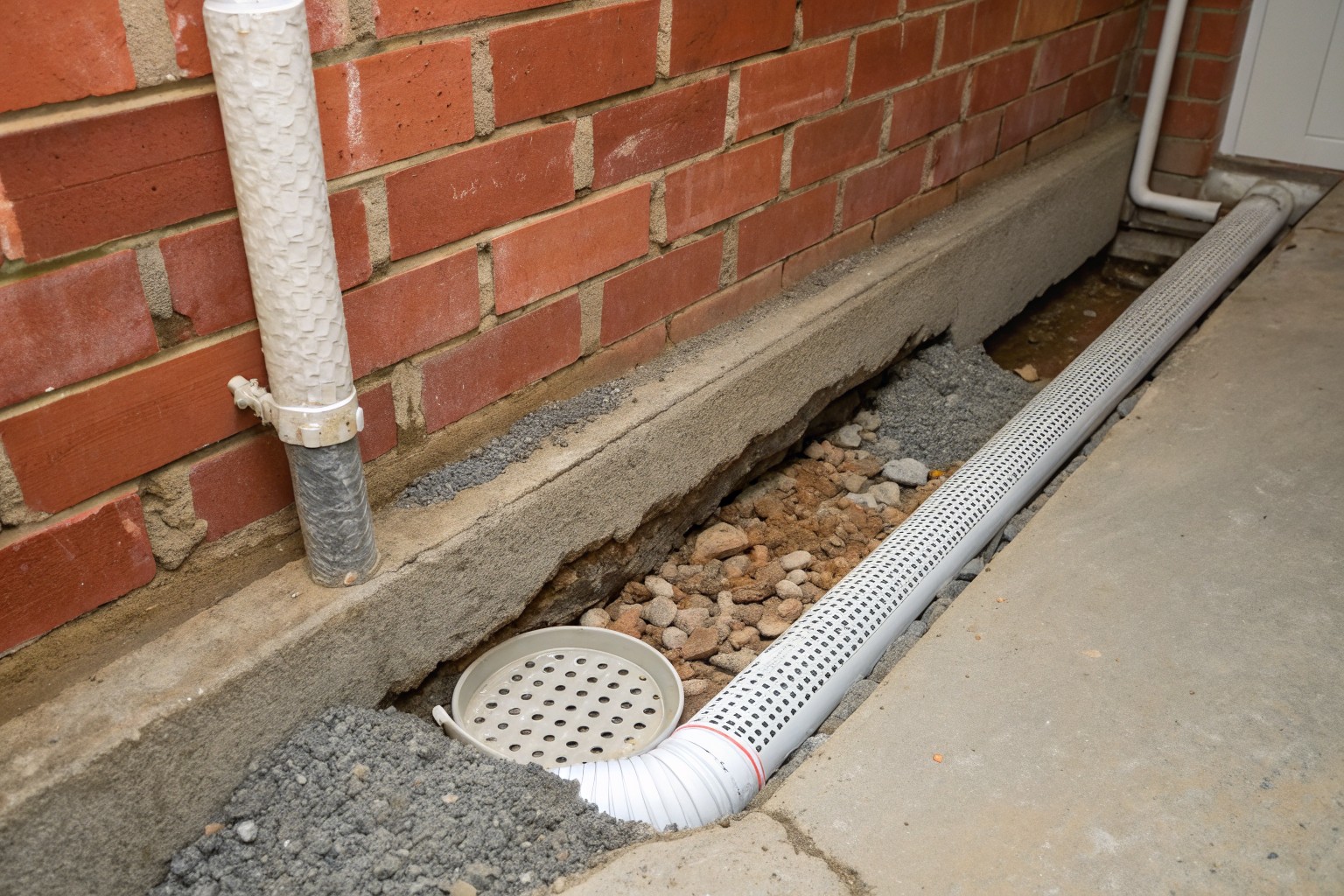
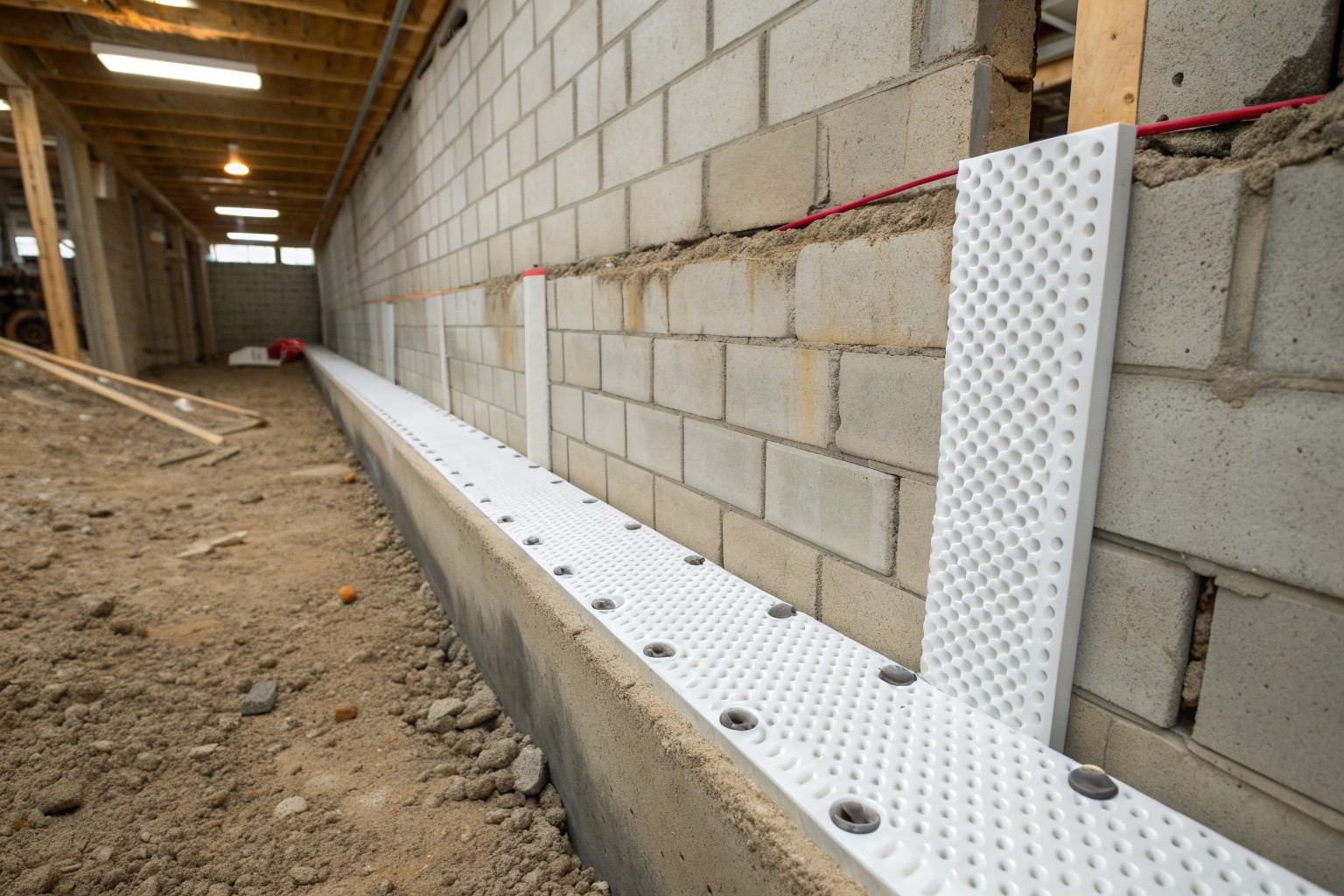
Inside, a strip of slab is cut out along the wet walls and perforated pipe goes into gravel beside the footing, feeding a sump pit. The pump pushes the water outdoors onto open ground, clear of the foundation and the neighbors' yard; it never belongs down a floor drain or laundry sink, in a cleanout, or in the sanitary sewer. Tying that line into any pipe is a separate job for a Georgia-licensed plumber under a plumbing permit.
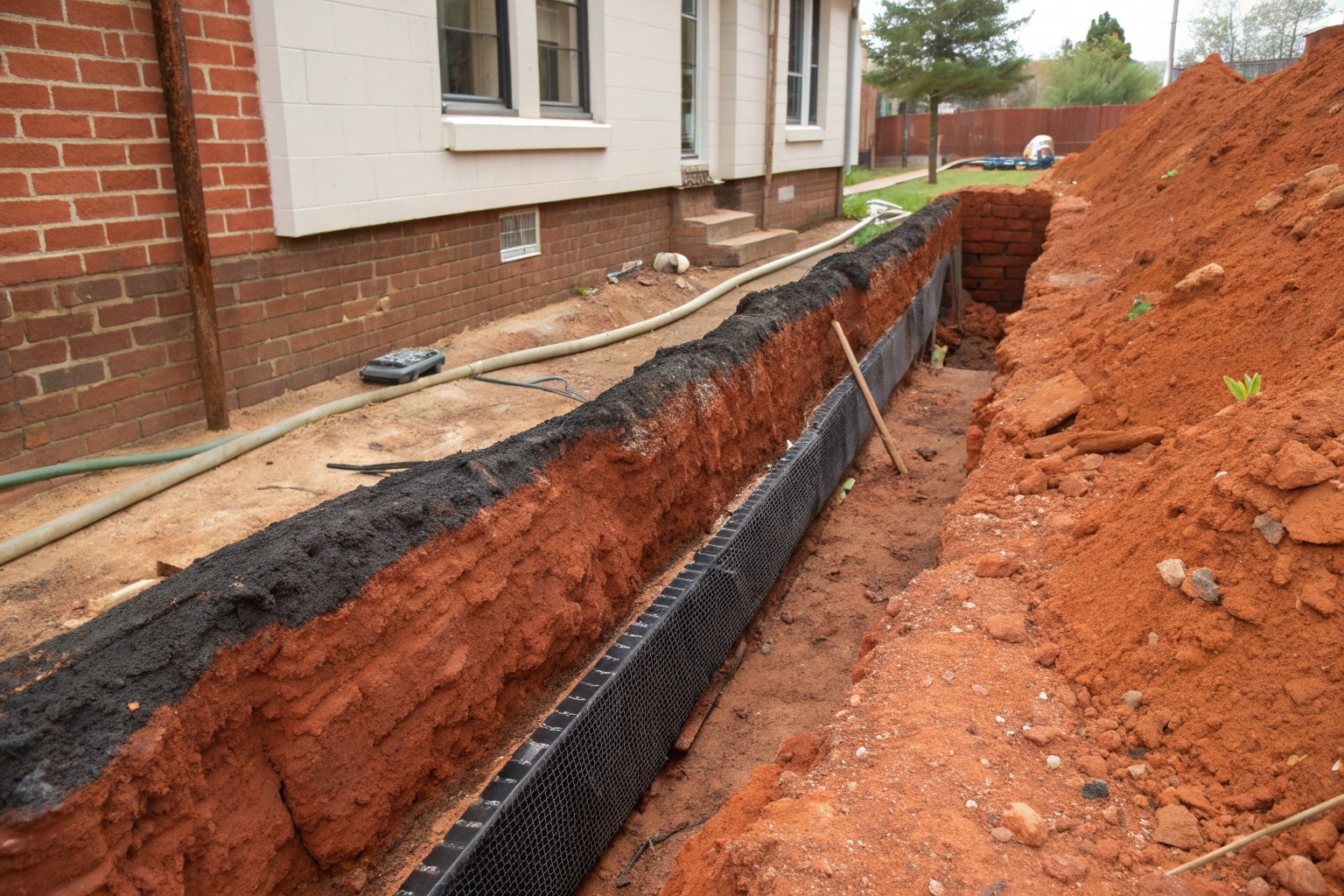
Outside, workers dig to the footing, clean the wall, apply a foundation waterproofing membrane and often lay new drain tile before backfilling. It stops water at the outer face but tears up walks and plantings. In a historic district, such as those in Druid Hills, GA and Avondale Estates, GA, outside digging may need a design review before a permit, and structural work raises the question of which Georgia license, if any, applies.
Age and slope matter. Census survey data dates about one home in eight in the city to before 1940 and about a quarter to before 1960, and walls from those decades often have more seams. Daylight basements are common on sloped lots: the downhill wall stands at grade while the uphill one holds back wet ground. Across the Georgia Piedmont the subsoil is often red clay, which lets go of water slowly once soaked, so that uphill pressure can last for days.
Plenty of homes in the region have no basement, and newer basements are not immune: old drain tile clogs with silt or was never tied into a working pump, pumps wear out, and backfill sinks until runoff leans toward the house.
The Usual Scenarios
- Seepage at the floor edge. An interior drain along the footing gives rising water a path to the pit.
- Uphill wall on a slope. An interior drain, or an outside membrane where digging is practical.
- A tired pump. A worn unit, a clogged outdoor discharge, or old tile that never reached the pit.
- Muggy-season dampness. A vapor barrier and a dehumidifier for condensation, not groundwater.
Budgeting for Basement Waterproofing
| Cost row | Figure | Source (year) |
|---|---|---|
| Typical basement waterproofing project | about $3,000 to $10,000 (average about $5,000) | Fixr national (2026) |
| Interior perimeter drain, per linear foot | $40 to $120 | Fixr national (2026) |
| Sump pump installation | $600 to $2,500 | Fixr national (2026) |
| Epoxy crack injection, per crack | $250 to $1,000 | Fixr national (2026) |
| Waterproof paint or sealant, per sq ft | $1 to $8 | Fixr national (2026) |
Each row is a national 2026 range from Fixr; no cost source for Atlanta, GA or Georgia was found, and none of these is a price from this site. Totals move with drain length, the pump, wall type, slope, a daylight wall, trench access, structural repair, historic-district review and any plumbing, which a licensed plumber prices. The cost calculator sketches the inside route.
The Typical Job, in Order
- The contractor's own look. Whoever gets in touch sets up its own visit, looks past the walls to downspouts and grading, and writes a detailed estimate.
- A signed contract. Price, payment dates, feet of drain, the pump, the discharge point, materials, start and finish dates, and warranty terms, including whether they transfer to a buyer.
- Permits and pipes first. In the City of Atlanta the contractor checks with the Office of Buildings, (404) 330-6150; elsewhere, the local office. Pipe tie-ins go to a Georgia-licensed plumber; a new outlet may need a licensed electrician.
- Money in stages. Nothing in full before work begins, no cash-only deals, and lien waivers in writing ahead of the final check.
Why One Contact Is Enough
One request brings one contractor's call or email, and the estimate it writes is its own. This site refers and advertises only: it is not a contractor or plumber, holds neither a plumbing license nor a residential or general contractor license, and gives out no gifts, discounts, inspections or prices. A contractor may pay it a flat advertising fee unrelated to whether work follows; homeowners pay and receive nothing.
You can still ask other contractors yourself. With whoever gets in touch, ask what Georgia license, if any, applies, search the name in the Secretary of State's online license search, and ask for a city or county business license, insurance certificates and recent local customers.
Frequently Asked Questions
Does a daylight basement need the same treatment on every wall?
Often not. The downhill wall at grade may stay fairly dry while the uphill and side walls hold back soaked ground, so some contractors drain only where water shows. Ask the contractor to state in writing which walls it plans to treat, and why.
Why not just paint the inside walls?
Paint or sealant can quiet light dampness, but when soaked clay drives water through the wall, the coating sits on the wrong side and tends to bubble and peel, so it works best alongside drainage. The table above prices it per square foot.
See Also
Smaller or partial jobs have their own pages: basement leak repair, foundation crack repair, sump pump installation and basement drainage.
Start Your Waterproofing Request
A basement waterproofing estimate always starts with your request, and nobody, this site included, can promise a dry basement; cleanup after a flood falls outside this site entirely. Mention which walls get wet and after what rain. The one independent contractor who receives it gets in touch if the job fits and writes its own estimate after seeing the walls. The form is the whole first step.